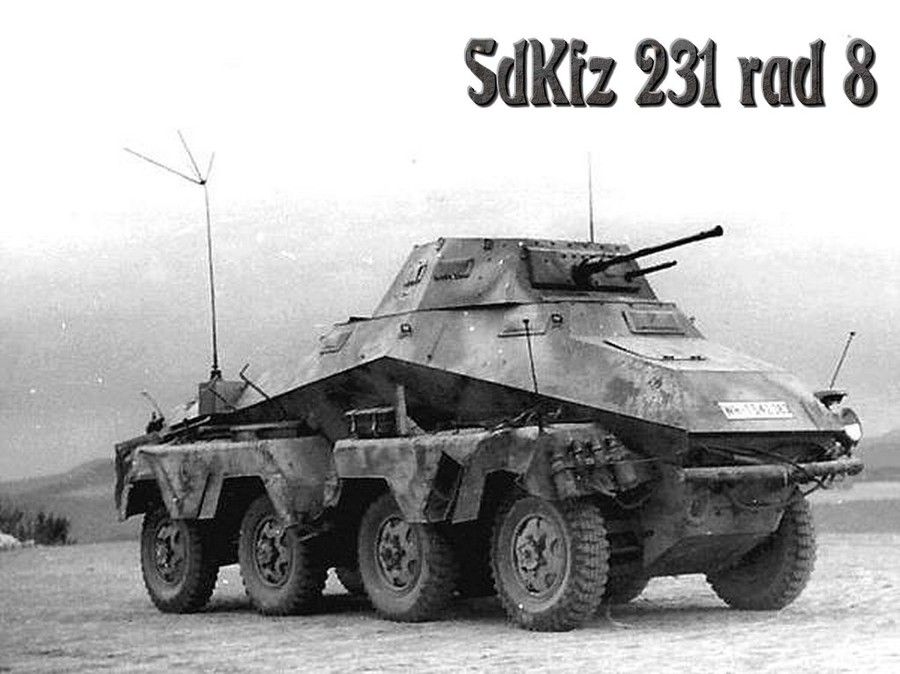
Schwerer Panzerspähwagen Sd Kfz 231 (8-rad)
Showing posts with label Flames of War. Show all posts
Friday, 18 July 2014
You ain't seen me, right! German Recce vehicles
One of the things that any Flames of War army is incomplete without is reconnaissance. There are a number of options available to the German Army and SS troops, from motorbike troops to armoured cars and even some light tanks. In the end, I decided to go with what I wanted to paint!
Schwerer Panzerspähwagen Sd Kfz 231 (8-rad)
Wednesday, 9 July 2014
StuG G Platoon
Having successfully painted the first of the StuG Assault Guns from the Open Fire! starter box, I set about finishing off the platoon by tackling the other two.
Here are the finished results. The only difference is that I used a darker paint for the green on the following two StuGs. Let me know which one you prefer 9assuming you can see the difference!), as that will form the scheme for all of my German vehicles.
I've also added some MIG Pigment and Citadel Typhus Corrosion to the tracks, track wheels and lower hull areas to add a bit of dirt and weathering to the miniatures.
Here are the finished results. The only difference is that I used a darker paint for the green on the following two StuGs. Let me know which one you prefer 9assuming you can see the difference!), as that will form the scheme for all of my German vehicles.
I've also added some MIG Pigment and Citadel Typhus Corrosion to the tracks, track wheels and lower hull areas to add a bit of dirt and weathering to the miniatures.
That's all for the StuGs, next up we'll take a look at some Shermans I think!
Monday, 7 July 2014
Painting the StuG G - Part 2
Here's the link to Part 1, in case you haven't seen it: Part 1
Thanks for coming back! When we left it in Part 1, we had applied the 50/50 mix of Chocolate Brown and Middlestone. The next job is to 'feather' on pure Chocolate Brown (Vallejo Model Color 872) in the centre of the brown camo areas, creating a gradient of colour.
After this we add the green in the same way. I've used a 50/50 mix of GW Moot Green and Vallejo Model Color 882 'Middlestone', followed by pure Moot Green. I wasn't convinced that Moot Green was the perfect colour to use; it was a toss-up between Moot Green and the darker Warpstone Glow (I don't have any of the equivalent Vallejo greens... blame the Dark Angels for that!).
Thanks for coming back! When we left it in Part 1, we had applied the 50/50 mix of Chocolate Brown and Middlestone. The next job is to 'feather' on pure Chocolate Brown (Vallejo Model Color 872) in the centre of the brown camo areas, creating a gradient of colour.
After this we add the green in the same way. I've used a 50/50 mix of GW Moot Green and Vallejo Model Color 882 'Middlestone', followed by pure Moot Green. I wasn't convinced that Moot Green was the perfect colour to use; it was a toss-up between Moot Green and the darker Warpstone Glow (I don't have any of the equivalent Vallejo greens... blame the Dark Angels for that!).
Friday, 4 July 2014
Painting the StuG G - Part 1
I recently started collecting a 15mm German Army. Apart from a few test stands of infantry, the first models I tackled in a serious way were the German StuG G Assault Guns from the Open Fire! box produced by Battlefront for its Flames of War game.
The StuG G in history
The StuG G, or the Sturmgeschütz III Ausführung G as it is more properly known, was the most widely produced variant of the Assault Gun class of German Armoured vehicles during World War II. Over 8,400 StuG G's were produced between 1940 and 1945 (out of a total of ~11,000 StuG III and StuH models), and they served extensively in all theatres except North Africa; 90th Light Division had a mere 2 StuG D assault guns in its 288 zbV Regiment at the Battle of Gazala in June 1942, an although more StuGs were sent to Tunisia in the closing days of the fighting in North Africa, they were never present in large numbers.
The StuG G in history
The StuG G, or the Sturmgeschütz III Ausführung G as it is more properly known, was the most widely produced variant of the Assault Gun class of German Armoured vehicles during World War II. Over 8,400 StuG G's were produced between 1940 and 1945 (out of a total of ~11,000 StuG III and StuH models), and they served extensively in all theatres except North Africa; 90th Light Division had a mere 2 StuG D assault guns in its 288 zbV Regiment at the Battle of Gazala in June 1942, an although more StuGs were sent to Tunisia in the closing days of the fighting in North Africa, they were never present in large numbers.
Thursday, 3 July 2014
Allied Army List
In the last Flames of War post we looked at the German Army list I will be making, so this time we will focus on their adversaries, the British! The basis for the list are the miniatures contained within the Open Fire! starter set. For the British these are:
- 6 Sherman V tanks
- 2 Sherman Firefly tanks
- US Parachute Infantry platoon
Market Garden
At first sight this may look a little odd. Why are US paratroopers being sold alongside British tankers? However, if you think about Operation Market Garden, it all becomes clear. Market Garden was General Montgomery's plan to move the British sector of the Allied front 64 miles from the Dutch border all the way to Arnhem, securing the most important prize: A bridge over the Rhine.
- 6 Sherman V tanks
- 2 Sherman Firefly tanks
- US Parachute Infantry platoon
Market Garden
At first sight this may look a little odd. Why are US paratroopers being sold alongside British tankers? However, if you think about Operation Market Garden, it all becomes clear. Market Garden was General Montgomery's plan to move the British sector of the Allied front 64 miles from the Dutch border all the way to Arnhem, securing the most important prize: A bridge over the Rhine.
Friday, 20 June 2014
German Army List
When starting to play a new game system, or when starting a new army within a currently played system, it is generally considered good practice to write an army list first, so that your purchasing and painting is goal focused rather than being based on the 'Ooh, shiny!' method.
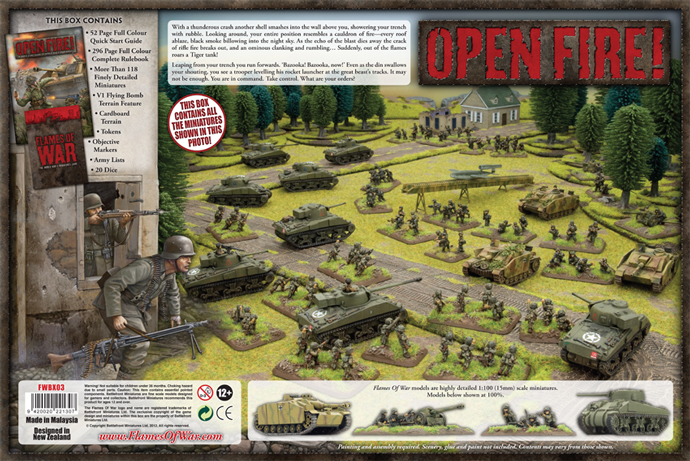
Amazingly, I did actually follow this piece of advice with Flames of War (unlike with my 6,500 point strong Dark Angels successor chapter for WH40k!). Having made the decision to purchase the Open Fire! starter set due to its quality and cheap price, I then moved onto finding a list that used all of the bits included in the box, and which 'felt right' thematically.
The German forces in Open Fire! consist of:
- 2 Grenadier platoons
- 2 7.5cm PaK40 anti-tank guns
- 3 StuG G assault guns
Amazingly, I did actually follow this piece of advice with Flames of War (unlike with my 6,500 point strong Dark Angels successor chapter for WH40k!). Having made the decision to purchase the Open Fire! starter set due to its quality and cheap price, I then moved onto finding a list that used all of the bits included in the box, and which 'felt right' thematically.
The German forces in Open Fire! consist of:
- 2 Grenadier platoons
- 2 7.5cm PaK40 anti-tank guns
- 3 StuG G assault guns
| The Open Fire! starter box has 2 x 800 point starter forces, an Allied Armoured Company and a German Grenadierkompanie |
Wednesday, 18 June 2014
Flames of War German Adventure
I've been a bit of a hobby ostrich recently, burying my head in the sand pretending I don't have a stack load of miniatures to paint! I blame Games Workshop entirely!
In order to ease me out of my 6-month slump I thought I'd take a look at some Flames of War models. World War II has always fascinated me from a historical standpoint, so merging two of my main hobbies (miniature painting and military history) seems a fairly natural thing to do.
Where to start?
There are an enormous amount of options for the budding painter/gamer. I chose Flames of War as the base gameset to use, simply because it uses 15mm miniatures (very common) and is an easily accessible and popular game. There are a number of other rulesets out there that use 15mm miniatures as well, however, so its all good!
In order to ease me out of my 6-month slump I thought I'd take a look at some Flames of War models. World War II has always fascinated me from a historical standpoint, so merging two of my main hobbies (miniature painting and military history) seems a fairly natural thing to do.
Where to start?
There are an enormous amount of options for the budding painter/gamer. I chose Flames of War as the base gameset to use, simply because it uses 15mm miniatures (very common) and is an easily accessible and popular game. There are a number of other rulesets out there that use 15mm miniatures as well, however, so its all good!
Subscribe to:
Posts (Atom)